// About
Hey, I'm Aditya.
I write about the things that live beneath the abstractions — processor pipelines, memory hierarchies, compiler behaviors, and the hardware-software boundary where real engineering happens.
Right now I'm building LLM-powered agents at Synopsys R&D that automate hardware verification — and writing about what that actually looks like from the inside.
ErrBits is a place to debug assumptions and understand how machines truly work, one bit at a time.
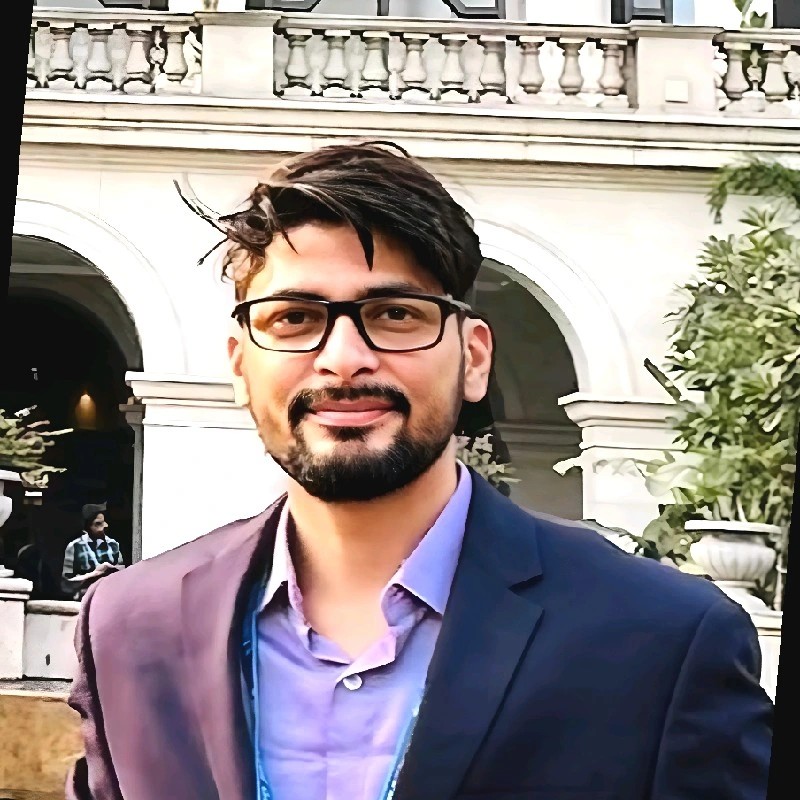
Aditya Gaurav
Virtual Prototype · Architecture / Algorithmic Modelling · Hardware Refinement
Synopsys Inc · Noida, India
View Profile
// who am i
struct Author {
const char* name;
const char* blog;
const char* focus[4];
bool never_lag_behind;
};
Author me = {
.name = "Aditya Gaurav",
.blog = "errbits.com",
.focus = {
"AI Agents for EDA",
"SystemC / TLM 2.0",
"Virtual Prototyping",
"C/C++ Internals"
},
.never_lag_behind = true
};
struct Author {
const char* name;
const char* blog;
const char* focus[4];
bool never_lag_behind;
};
Author me = {
.name = "Aditya Gaurav",
.blog = "errbits.com",
.focus = {
"AI Agents for EDA",
"SystemC / TLM 2.0",
"Virtual Prototyping",
"C/C++ Internals"
},
.never_lag_behind = true
};